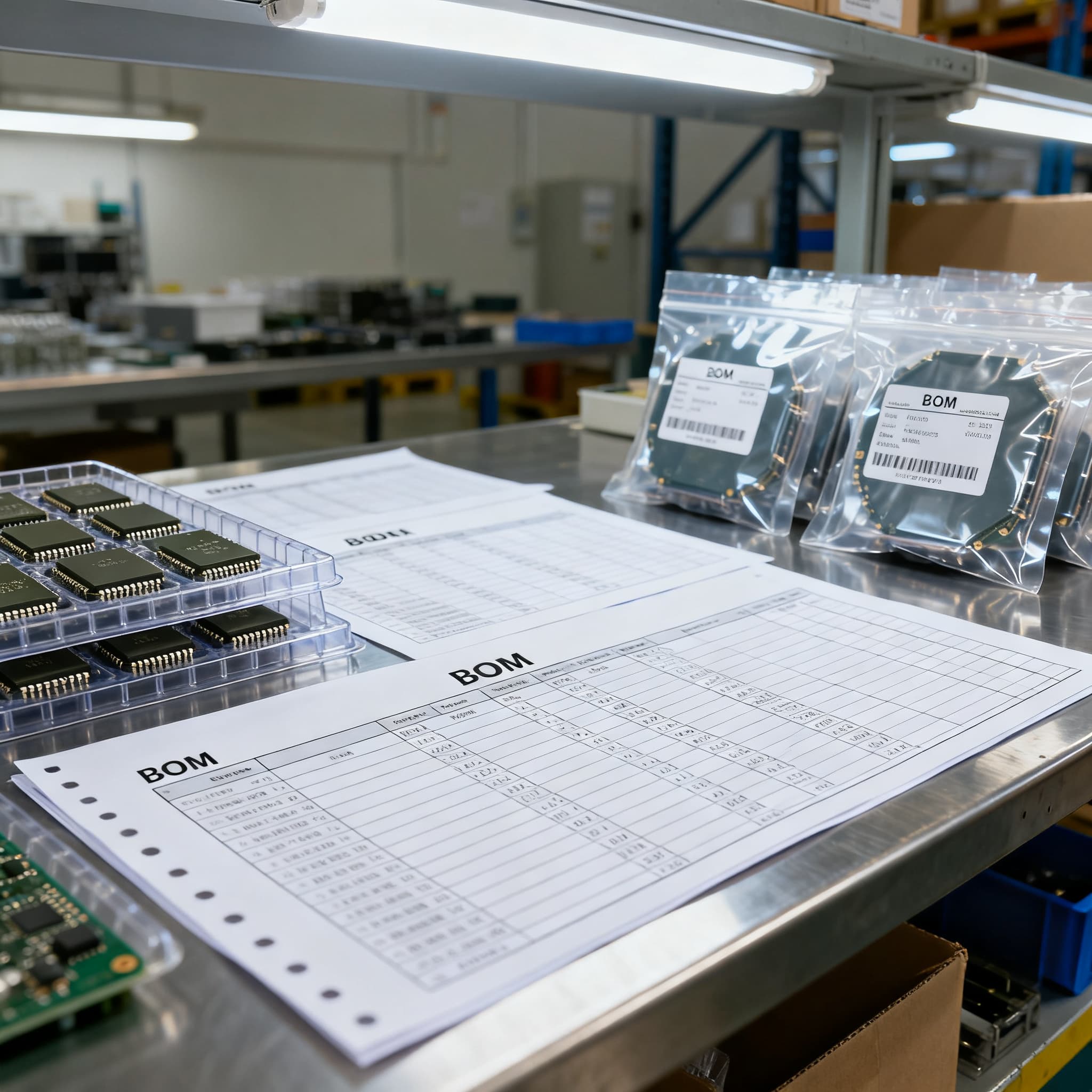
CK05BX101K Procurement Guide: Pinout and Spec Checks for RFQ
CK05BX101K procurement checklist: datasheet specs and pinout fields to verify on RFQ, plus BOM upload path on BOMNow.
Why CK05BX101K Lifecycle Warnings Should Reshape Your RFQ
Few component families carry as much procurement baggage as the CK05BX101K — a 100 pF, ±10 %, 200 V MLCC with a BX dielectric that traces its footprint back to MIL‑C‑11015. That military legacy means the part is still widely drawn into high‑rel and long‑life BOMs, but it also means that lifecycle signals demand a different kind of RFQ discipline. If you treat CK05BX101K like a commodity bypass cap, you risk building an NPI around a component that the manufacturer has already flagged as Not Recommended for New Design.
Several sources, including manufacturer lifecycle databases, confirm the part sits in a mature phase, with some suppliers listing the CK05 family as NRND or legacy — a signal that, while active production continues, the fab run cadence and engineering support are winding down. Industrial Monitor Direct’s NRND engineering guide explains what that yellow‑banner classification means in practice: production limited to existing demand, no new tooling, and a formal Last‑Time‑Buy window the moment an EOL is declared. And FPGACenter’s EOL vs NRND breakdown reminds buyers that NRND can persist for years — but the moment the PCN drops, the clock starts ticking toward the last order date, often with a 6‑ to 12‑month cutoff.
For any BOM that carries CK05BX101K, this means the RFQ must open with lifecycle‑aware questions, not just price and delivery. Ask the distributor for the manufacturer’s most recent product‑change notification, confirm the current lifecycle classification, and build a buffer into your production plan for a possible lifetime buy. The old‑school CK05 pinout hasn’t changed, but the market window around it certainly has.
Pinout and Spec Details That Go Beyond the CK05 Datasheet
A quick glance at the ordering code reveals the basics: CK05 = MIL‑style case, BX = stable dielectric, 101 = 100 pF, K = ±10 %. Yet when you pull the datasheets from the four major manufacturers that still ship this part — KEMET CK05BX101K, KYOCERA AVX CK05BX101K, Knowles/Illinois Capacitor CK05BX101K, and Yageo CK05BX101K — the sort of nuance that can upset a PCB submission or a qualification report emerges. The table below pulls the procurement‑critical parameters from those manufacturer‑current revision documents.
| Parameter | Value/Range | Unit/Notes |
|---|---|---|
| Capacitance | 100 | pF |
| Tolerance | ±10 % (K) | Tested at 1 MHz, 1.0 Vrms |
| Rated Voltage | 200 | VDC |
| Dielectric | BX | MIL‑PRF‑55681 type; stable within ±15 % from -55 °C to +125 °C |
| Temperature Coefficient | ±15 % over operating range | BX characteristic per EIA‑198 |
| Operating Temperature Range | -55 to +125 | °C |
| Case Style (CK05) | Molded radial, conformally coated | Epoxy body, axial leads optional; radial is standard |
| Lead Spacing (nominal) | 0.200 (5.08 mm) | inches (mm); some datasheets show 0.190–0.210″ |
| Case Dimensions (L × W × H) | 0.190 × 0.190 × 0.090 | inches; typical max envelope |
| Lead Wire Diameter | 0.020 (0.51 mm) nominal | inches; copper, tin‑lead finish (rohs versions available) |
| Packaging | Bulk, tape & reel, ammo | Confirm packaging code when ordering |
| Marking | Manufacturer‑specific; may include capacitance code and voltage | Verify against certified sample if authenticity is a concern |
Key takeaway: The physical pinout is MIL‑standardized, so PCB footprints are interchangeable, but the lead‑wire diameter variation (0.020 ″ ±0.002 ″ depending on vendor) can affect insertion‑force specification on automated assembly. Always pull the exact supplier drawing when you generate the PCB library. The dielectric stability envelope — ±15 % over the full military temperature range — is something you won’t get from a common X7R substitute, a point we revisit in the FAQ.
CK05BX101K from KEMET, AVX, or Knowles: What Changes and What Stays the Same
When your AVL shows three approved sources for the same CK05BX101K part number, the temptation is to treat them as drop‑ins. The MIL‑C‑11015 / CK05 case form factor does enforce a common footprint, but a deeper cross‑reference reveals small differences that procurement engineers need to flag. We applied the pin‑compatibility verification approach endorsed by Muziot and the multi‑source cross‑reference discipline from Apexcomponent to compare datasheets from KEMET, AVX, Knowles, and the MIL‑grade CK/CKR line offered by Cornell Dubilier under MIL‑C‑11015. The table below distills what you should verify before accepting a second‑source candidate in a single production BOM.
| Comparison Metric | KEMET CK05BX101K | KYOCERA AVX CK05BX101K | Knowles/Illinois CK05BX101K | Cornell Dubilier CK05 (MIL) | Selection Note |
|---|---|---|---|---|---|
| Lead Spacing Tolerance | 0.200″ ±0.020″ | 0.200″ ±0.015″ (typical) | 0.200″ ±0.020″ | 0.200″ ±0.010″ per MIL drawing | Smallest tolerance wins on high‑density layouts; CDE offers tightest spec. |
| Lead Wire Diameter | 0.020″ ±0.002″ | 0.020″ nominal | 0.020″ ±0.002″ | 0.020″ ±0.0015″ | Minor variation; check with your PCB hole‑size tolerance stack. |
| Dielectric Type & TC | BX, ±15 % -55/+125 °C | BX, ±15 % -55/+125 °C | BX, ±15 % -55/+125 °C | BX per MIL‑C‑11015 | Same characteristic; verify latest rev for any derating notes. |
| Voltage Rating | 200 VDC | 200 VDC | 200 VDC | 200 VDC | Identical; no margin concern. |
| Capacitance Tolerance | K (±10 %) | K (±10 %) | K (±10 %) | K (±10 %) | Standard for the suffix; don’t accept “M” (±20 %) as equivalent without engineering sign‑off. |
| Body Material & Marking | Epoxy conformal; ink marking with capacitance/voltage | Epoxy molded; laser or ink; code may differ | Epoxy coating; marking may be abbreviated | Epoxy per MIL‑PRF‑39014; includes full MIL‑spec marking | Incoming inspection should compare marking to the certified drawing; counterfeits often get the font wrong. |
| Packaging Options | Bulk, T&R, ammo | Bulk, Tape & Box | Bulk, Tape & Reel | Bulk, tape per MIL‑STD | Match the internal part‑number suffix to the packaging code in the RFQ. |
| Lifecycle Signal | Active, mature | NRND per manufacturer’s recommendations | Limited production; factory confirmation advised | Active for military replenishment | The NRND flag on AVX forces a different discussion about long‑term supply than an active‑mature KEMET classification. |
Just as the Bently Nevada probe ordering‑code example warns that every configuration suffix matters, the CK05 BX 101 K string can mask a divergent software‑level compatibility issue if the manufacturer changes the molding compound or lead finish without notice. A quick cross‑check against the current PCN registry can prevent a lot of later pain.
How to Spot and Dodge CK05BX101K Sourcing Pitfalls Before the RFQ Goes Out
An aging MIL‑spec MLCC attracts a unique set of purchasing traps: a spec‑locked drawing that hasn’t been revised in a decade, a “BX look‑alike” offered as a cost‑down, or a lot that surfaces without traceability. TT Electronics’ application note on instant‑access lifecycle data makes a strong point: passive components with long legacy lives often have silent PCN changes that don’t flag unless you specifically request the latest revision. For CK05BX101K, the pitfalls cluster around three areas, and a structured RFQ checklist turns them from showstoppers into manageable risks.
- Verify the dielectric is truly BX, not a close substitute. Procurement‑focused aggregators on Octopart can show multiple “CK05BX101K” lines from non‑authorized stock, some of which may actually be X7R or C0G equivalents remarketed under the MIL part number. If your circuit relies on the BX temperature‑coefficient stability (±15 % over 180 °C span), a capacitor with the wrong dielectric undermines tuning and timing circuits.
- Demand PCN/EOL attestation with the quote. Because manufacturer lifecycle status varies — one vendor may list CK05BX101K as active while another marks it NRND — ask the distributor to attach the manufacturer’s most recent product‑change notification or a statement of the current lifecycle classification. This document becomes your internal trigger for a lifetime‑buy analysis.
- Cross‑check the drawing revision. Old military‑style datasheets often carry revision dates from the early 2000s. Go directly to the manufacturer’s site (or the DigiKey/Mouser product pages linked earlier) and download the latest PDF. Look for any notes on thermal derating, solderability under lead‑free profiles, and changes in body‑coating material that could affect humidity robustness.
- Confirm lead finish and RoHS compliance. While the original CK05 was often tin‑lead, modern builds may ship with matte‑tin or SnCu finishes. If your assembly line cannot tolerate sudden lead‑free introduction, specify the finish code explicitly in the RFQ.
The table below translates these watchpoints into a timeline‑friendly checklist you can attach to any CK05BX101K sourcing request.
| Action | When to Use | Trade‑off |
|---|---|---|
| Request lifecycle status & PCN letter from the manufacturer | Every RFQ for this MPN, especially for new production | Adds 24–48 h to the quoting cycle but prevents an NPI that suddenly needs an LTB |
| Demand lot traceability and a certificate of conformance | When source is outside authorized distribution | May carry a slight premium; protects against mixed‑stock and counterfeits |
| Perform visual/microscopy incoming inspection on a sample lot | First receipt from a new supplier or after a long gap | Consumes engineering‑lab time but catches remarking, wrong lead finish, or dimensional drift |
| Specify exact packaging code and delivery date in RFQ | When production cannot accept alternative packaging forms | May restrict available inventory; front‑end agreement avoids last‑minute repackaging costs |
| Request the latest dielectric cross‑section data (TC + voltage derating) | Before approving a second‑source substitution | Requires engineering sign‑off; ensures the replacement doesn’t shift the filter corner or timing constant |
Tip: When circulating the RFQ to multiple distributors, include a field for “Date of manufacturer’s last PCN for this MPN” and insist on a response. Silence or a generic “no known PCN” without a document ID is a soft indicator that traceability may be weaker than you need for a MIL‑footprint part.
Questions Engineers and Buyers Ask Before Committing to CK05BX101K
Q: Is CK05BX101K still in active production, or do I need to plan a life‑time buy?
Several manufacturers still ship CK05BX101K, but the part is widely flagged as mature or NRND. Use the TDK lifecycle page and distributor PCN feeds to confirm the status with your chosen vendor. If an EOL date is published, act on the last‑time‑buy window before the final shipment date. At the time of writing, KEMET lists the part as active, while AVX recommends moving to newer constructions; always verify directly before cutting a production purchase order.
Q: Can I replace CK05BX101K’s BX dielectric with a common X7R cap in the same footprint?
Not without a design review. BX (military specification) delivers a defined temperature coefficient and capacitance stability over -55 °C to +125 °C that X7R does not match. X7R can lose 20–30 % of capacitance over that temperature span, whereas BX stays within ±15 %. Substitution risks circuit detuning in RF or timing applications. Engineering must evaluate the actual voltage and temperature bias before signing off.
Q: How do I verify I’m getting a genuine CK05BX101K and not a remark or functional substitute?
Order from franchised distributors linked from the manufacturer’s site or Octopart. Inspect lead finish, marking, case dimensions against the original manufacturer drawing, and demand lot traceability and a certificate of conformance. Counterfeit CK05‑style capacitors often show irregular epoxy coatings, missing date codes, or lead‑spacing that is off by more than 0.005″. A quick microscope check with a go/no‑go gauge is a low‑cost insurance step.
Q: Do all CK05BX101K parts share the same pinout and lead spacing?
The MIL‑C‑11015/CK05 case standardizes the body size and 0.200″ (5.08 mm) lead spacing, but minor dimensional tolerances and lead‑wire diameters differ among KEMET, AVX, and Knowles. For example, AVX tolerance on spacing can be tighter (0.200 ± 0.015″) than KEMET’s (0.200 ± 0.020″). Always pull the specific vendor datasheet before finalizing the PCB footprint, and consider a drill‑hole size that accommodates the maximum lead diameter across all approved sources.
Q: What’s a realistic lead time for CK05BX101K and how should I factor it into my RFQ?
Lead times swing from stock‑on‑hand at Newark/Mouser to 14–20 weeks for factory‑ordered units, especially for the full military temperature range variant. State a hard delivery deadline in the RFQ and ask for the manufacturer’s planned production date. If the line is NRND, factory scheduling may be batch‑driven; include a demand forecast to help the supplier reserve capacity.
When you’re ready to consolidate multiple BOM lines that include CK05BX101K or any other military‑grade passives, a single sourcing loop reduces the paperwork burden and helps you catch lifecycle surprises early. Upload Your BOM for a consolidated quote, or reach out for a single‑MPN request; the team will cross‑reference lifecycle signals, datasheet revisions, and supplier options so your RFQ arrives with the verification already done.
References & Further Reading
- TDK MLCC Lifecycle Status Database
- NRND Engineering Guide – Industrial Monitor Direct
- EOL vs NRND Lifecycle Explained – FPGACenter
- KEMET CK05BX101K – DigiKey
- KYOCERA AVX CK05BX101K – Newark Electronics
- Knowles/Illinois Capacitor CK05BX101K – Mouser
- CK05BX101K – Octopart (Yageo/KEMET)
- Pin Compatibility Checklist – Muziot
- IC Replacement & Component Cross‑Reference Guide – Apexcomponent
- Cornell Dubilier CK/CKR Series (MIL‑C‑11015) – DigiKey PDF
- Bently Nevada 3300 XL Ordering Code – Apter Power
- TT Electronics Lifecycle Data Application Note